Ilyas Insects
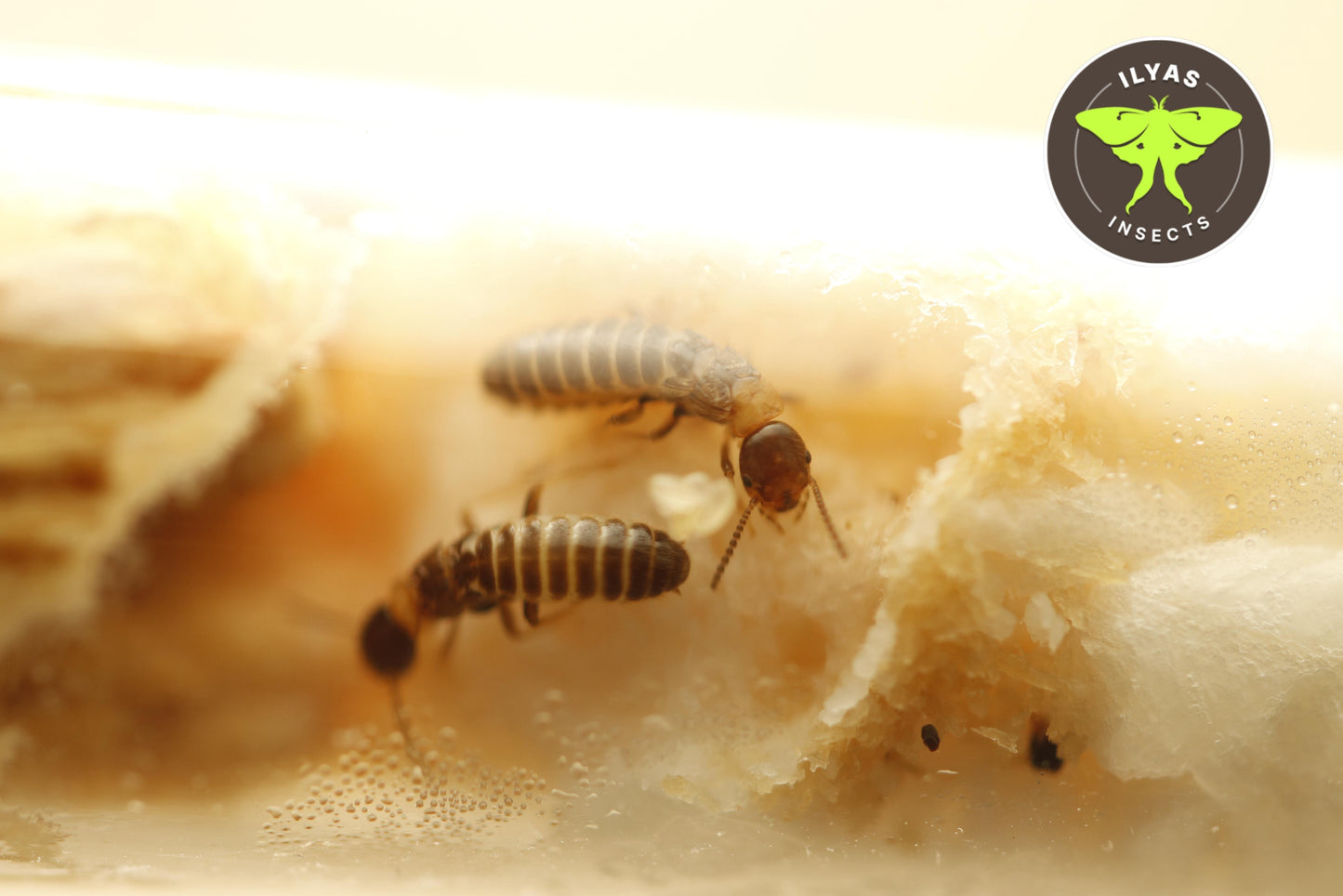
Reticulitermes cf chinensis
Reticulitermes cf chinensis
Couldn't load pickup availability
Reticulitermes cf chinensis Care Sheet
Overview
Reticulitermes sp. (China) is a subterranean termite species that lives within wood and soil-based environments. Unlike dampwood termites, they rely on a balance of humidity and confined nesting conditions rather than large, open setups.
They are a sensitive and space-dependent species, and successful keeping depends heavily on correct enclosure size, humidity control, and high-quality wood.
Temperature & Humidity
- Temperature: 25–28°C (77–82°F)
- Minimum: Below 20°C slows growth significantly
- Maximum: Above 30°C may cause colony collapse
-
Humidity:
- Maintain substrate at 50–70% moisture
- Should form a clump when squeezed, but break apart when released
- No standing water (prevents mold)
This is a warm-adapted species, but overheating is dangerous.
Core Setup (Most Important Section)
The setup is simple, but must be done correctly:
Container
-
Test tube setup (recommended for new colonies):
- 10–20 mm diameter test tube
- Damp cotton or toilet paper at one end
- Slightly humid wood placed on top
- Cotton or plastic cap to prevent escape
- Suitable for colonies up to ~50 workers
-
Expansion phase:
- Keep colony in tube until dozens of workers are present
- Then move to a small tub-and-tube setup
- Add thin layer of humid substrate
- Continue adding wood-filled tubes for expansion
Key principle: Smaller space is better than larger space.
Large enclosures cause stress and feeding refusal.
Substrate
- Thin layer of slightly humid substrate when upgrading setup
- Examples:
- Wood particles
- Decomposed wood material
- Keep it:
- Lightly moist
- Never wet or waterlogged
Wood (Essential)
- Provide fermented or partially decomposed wood:
- Preferably from Fagaceae family
- Also suitable: black locust, camphor wood
- Additional options:
- Damp paper towel (supplement only)
Critical points:
- Wood is the primary food source
- Never rely on paper alone
- Wood must be slightly humid, not dry
Humidity Management
- Maintain consistent humidity inside the enclosure
- Achieved through:
- Moist wood
- Slightly damp substrate
- Occasional light misting
- Do not:
- Add water dishes
- Allow water pooling
Moisture should come from the environment and materials, not free water.
Feeding
- No separate feeding routine required
They feed on:
- Fermented wood (primary)
- Damp paper (secondary)
Important:
- Mold is extremely dangerous
- Remove mold immediately when detected
Daily Care
-
Escape prevention:
- Only place ventilation holes in lids
- Termites cannot climb smooth surfaces easily
- They may slowly build tunnels along walls—remove early
-
Cleaning:
- Remove moldy or spoiled material weekly
- Avoid disturbing the colony unnecessarily
-
Hydration:
- Light misting if needed
- No standing water
-
Observation:
- Monitor:
- Feeding activity
- Egg-laying
- Soldier numbers
- Minimize opening the enclosure
- Monitor:
Colony Behavior
- They remain mostly hidden within wood
- Limited visible activity
- Slow structural expansion through wood and substrate
Do not expect ant-like foraging behavior.
Colony Development
- Colonies start from:
- A reproductive pair
- Or workers forming reproductives
Growth is:
- Moderate to slow
- Stable under correct conditions
Maintenance
- Keep:
- Wood moist
- Substrate slightly humid
- Avoid:
- Drying out
- Overheating
- Frequent disturbance
Share