Ilyas Insects
Citheronia regalis
Citheronia regalis
Impossible de charger la disponibilité du service de retrait
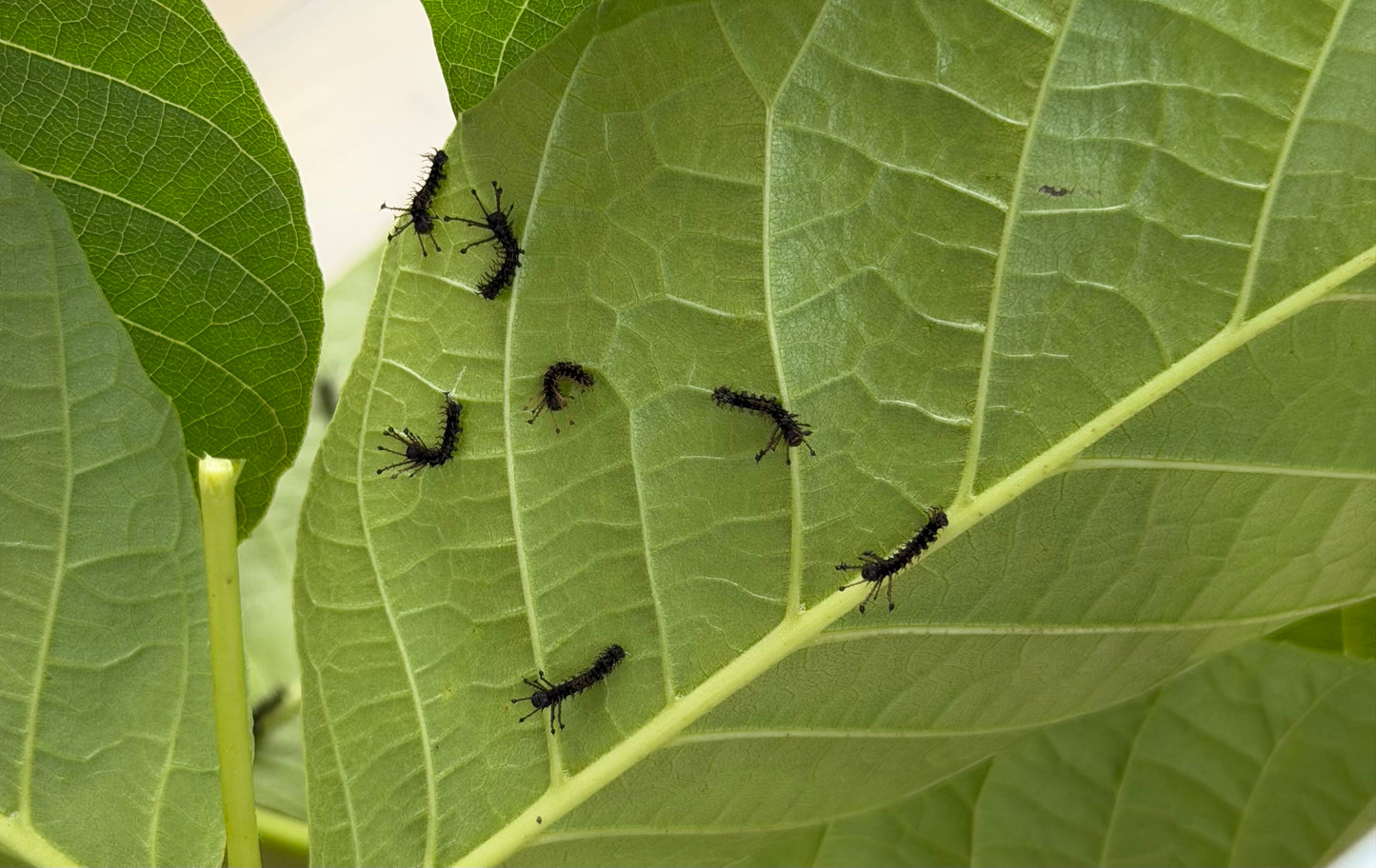
Citheronia regalis, commonly known as the Regal Moth or Royal Walnut Moth, is a large Saturniid native to eastern North America. Its larvae are famously known as Hickory Horned Devils and are among the largest caterpillars in North America. Adults are striking, with grey-green forewings marked by orange veins and yellow spots, and orange hindwings.
Environment: Use a well-ventilated rearing cage or sleeves for larvae. Provide fresh cut host plant branches in water, making sure larvae cannot fall into the water. Mature larvae leave the food plant and need a container with several centimetres of soft soil or substrate for underground pupation.
Humidity: Moderate. Keep larvae well ventilated and avoid overly wet conditions. Pupae should be kept in slightly moist, not wet, substrate to prevent desiccation while avoiding mold.
Diet larvae: Main host plants include Carya species such as hickory and pecan, Juglans species such as walnut and butternut, Liquidambar styraciflua / sweetgum, and Rhus / sumac. Other recorded hosts include ash, Ligustrum, sycamore and some Prunus species, but local acceptance may vary.
Behavior: Larvae are generally solitary and become very large in the final instar, with prominent red-orange horns. Despite their intimidating appearance, they are harmless and do not sting. Unlike many Saturniids, this species does not spin a cocoon; mature larvae burrow into soil and pupate in an earthen chamber. Adults are nocturnal, do not feed, and need enough space to expand and protect their wings after emergence.
Temperature: During larval growth, normal warm summer conditions are suitable, roughly 20–26 °C. Pupae normally overwinter and require a cool diapause period before adult emergence the following season. This species is usually univoltine, producing one generation per year.
Partager