Ilyas Insects
Hippotion celerio
Hippotion celerio
Impossible de charger la disponibilité du service de retrait
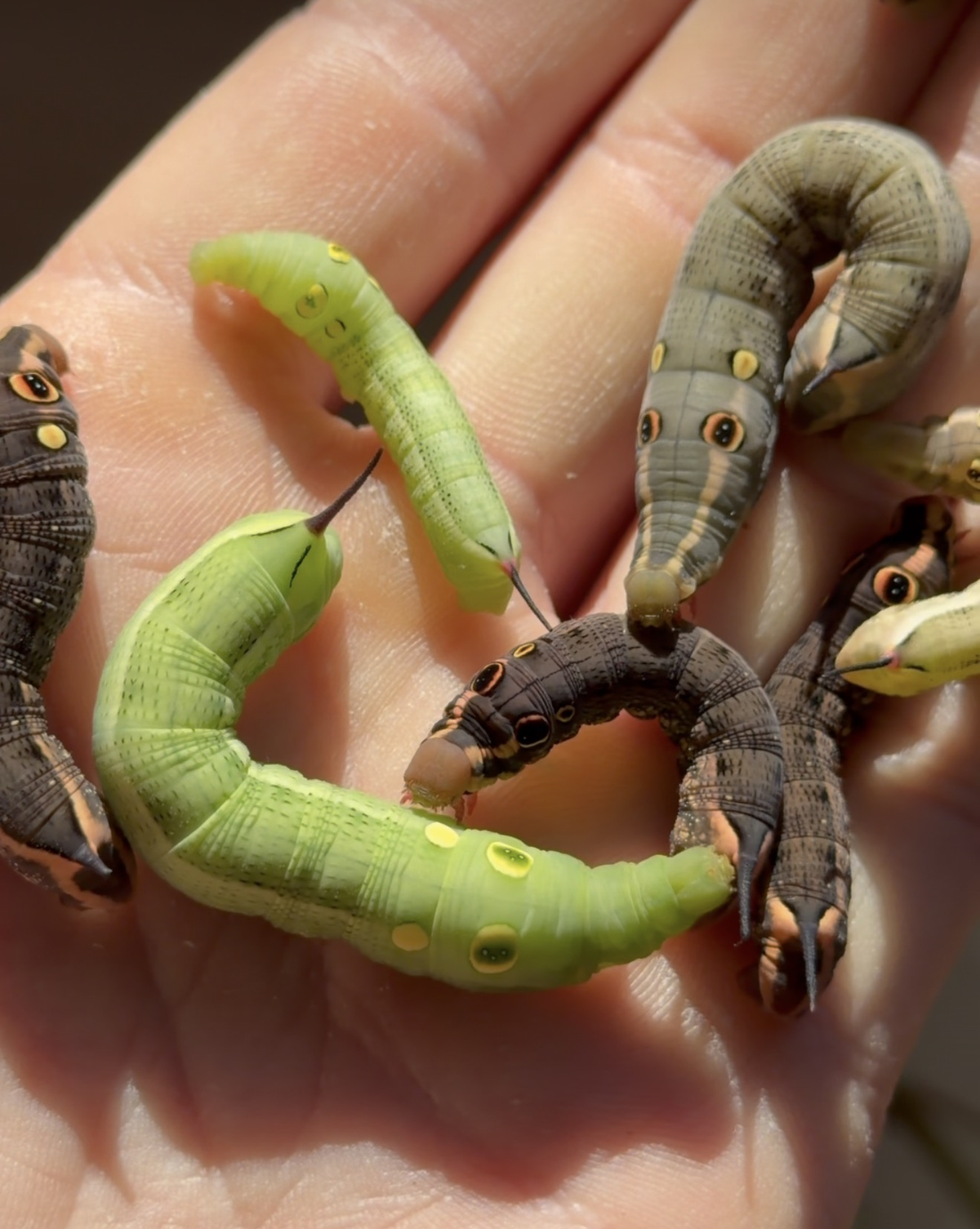
Hippotion celerio, commonly known as the Silver striped Hawk moth or Vine Hawk moth, is a fast, streamlined Sphingid found across Africa, southern Europe, the Middle East, Asia and Australia. Adults are recognizable by their brown forewings crossed with a bright silver stripe and pinkish red patches on the hindwings. The large caterpillars are just as striking, with prominent eye spots near the head and colors ranging from green to brown or dark grey.
Unlike most hawk moths, this species adapts very well to captivity. Adults pair readily, females lay large numbers of eggs, and the full life cycle is completed in about a month, making it an excellent choice for both beginners and experienced Lepidoptera keepers.
Environment: A spacious mesh cage for adults, as they are fast and agile fliers. Larvae can be kept in ventilated containers or mesh cages with fresh cut host plant in water, with the container opening covered to prevent drowning. Provide a layer of loose substrate such as slightly damp soil, coco fiber or leaf litter for pupation.
Humidity: Moderate. Mist lightly and keep the enclosure clean and well ventilated. Remove frass and old leaves regularly, as larvae eat a lot and waste builds up quickly.
Diet (larvae): Highly polyphagous. Grapevine (Vitis) and Virginia creeper (Parthenocissus) are the preferred hosts. Larvae also accept Fuchsia, willowherb (Epilobium), Impatiens, Cissus, Arum lily and dock (Rumex). Avoid switching host plants mid-development.
Diet (adults): Adults feed actively on nectar. Offer a honey or sugar water solution on colorful flowers, artificial flowers or small dishes. Well-fed adults live noticeably longer and produce more eggs.
Breeding: Pairing happens easily in captivity, usually at night. Females lay around 150 small, pale green eggs, preferably on the underside of host plant leaves. Adding host plant to the adult cage encourages egg laying. Eggs hatch in about 3 to 8 days depending on temperature.
Behavior: Adults rest during the day and become active at dusk. Larvae feed freely on the leaves, change color as they grow and reach up to 8 cm. When ready to pupate, they burrow into loose substrate and form a simple shelter of debris. The pupal stage lasts about 2 to 3 weeks.
Temperature: 22 to 28 °C is ideal. Development slows considerably below 20 °C and practically stops around 15 °C. This species has no winter diapause, so pupae cannot be overwintered and will hatch even in cool conditions.
Partager