Ilyas Insects
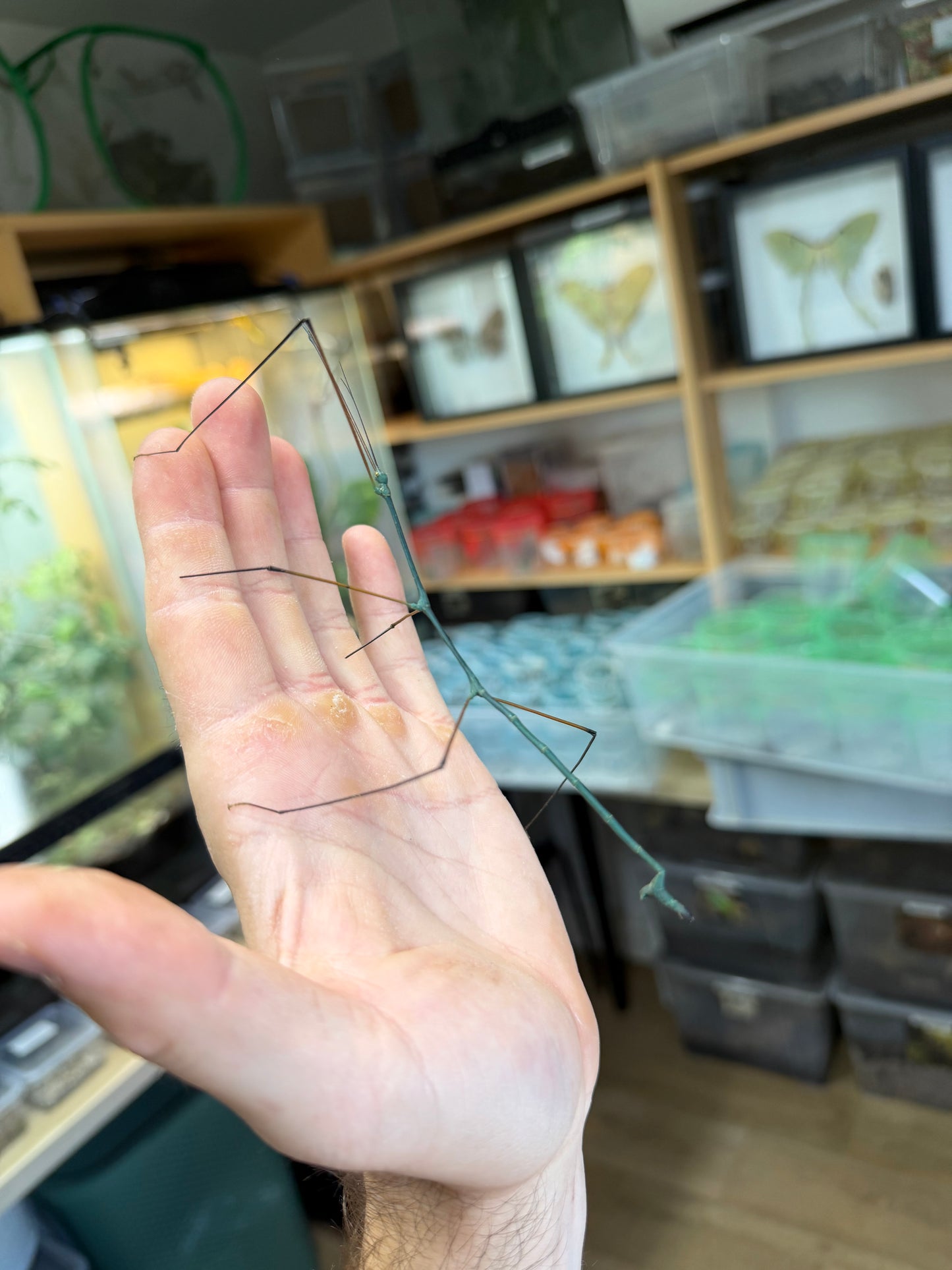
Ramulus nematodes "Khao Lak"
Ramulus nematodes "Khao Lak"
Impossible de charger la disponibilité du service de retrait
Common name: Blue stick insect / Thai Stick Insect, Khao Lak locality
Origin: Southeast Asia, with this culture originating from the Khao Lak area on the Andaman coast of southern Thailand. The species occurs in warm lowland forest and secondary growth, and is widespread and adaptable across its range.
Diet: Accepts a broad range of foodplants. Bramble is taken readily and is available year round, and oak, hazel, raspberry, privet, hawthorn and eucalyptus are all eaten well. Rinse cut branches before offering them and avoid plants collected along busy roads or from treated gardens, as pesticide residue stays harmful long after application. Stand the stems in a narrow necked bottle of water and plug the opening so nymphs cannot fall in and drown.
Temperature: 20 to 28 degrees. Room temperature suits this species without extra heating in most homes. Growth slows noticeably below 20 degrees but the animals remain healthy.
Humidity: 60 to 75 percent, misted two to three times per week. This species tolerates drier conditions better than most stick insects, but nymphs approaching a moult benefit from a light spray to help them shed cleanly. Avoid keeping the enclosure permanently wet as stagnant air encourages mould on the foodplant.
Size: Adult females reach around 11 to 14cm body length, slender and stick like, in colour forms ranging from grass green through to grey brown, sometimes with fine mottling. Males are considerably more slender and shorter at around 8 to 9cm, usually brown, with longer antennae and a more active temperament. Nymphs hatch at roughly 1.5cm and look like miniature adults from the start.
Lifespan: 10 to 14 months, with adults living around 4 to 6 months after their final moult.
Defense: Purely passive. This species has no defensive spray or chemical glands. When disturbed it relies on camouflage and catalepsy, holding perfectly still with the front legs stretched out alongside the head so it reads as a twig, and it will sway gently to mimic a branch moving in the wind. Nymphs may drop from the branch and remain motionless on the floor. Like most phasmids they can shed a leg when grabbed, so always coax rather than pull them off a branch. Safe to handle.
Breeding: Males occur in this locality, but females also reproduce parthenogenetically and unmated females will still produce viable eggs that hatch out as females. Fertilised eggs give a mix of both sexes. Females begin laying roughly 2 to 3 weeks after the final moult and flick their eggs away across the enclosure floor at a rate of several per day. Eggs are small, dark and seed like, around 3mm, and are best collected from the substrate and incubated on slightly damp sand or vermiculite in a ventilated box. Incubation takes about 2 to 4 months at room temperature. This species is prolific, so consider freezing surplus eggs unless you have takers for the nymphs.
Housing: Height matters more than floor space, as the enclosure needs to be at least three times the adult body length to allow safe moulting. A 30x30x45cm cage suits a small group of nymphs or a few adults, while 45x45x60cm comfortably holds a colony of adults. Mesh sided cages work well and give the animals plenty of grip. Cover the floor with kitchen paper or a thin layer of substrate to make egg collection simple, and provide plenty of branching foodplant for the animals to hang from. Good ventilation is important for this species.
Partager